



Raising kids in Russia might seem pretty cheap for you. A place in a state-funded kindergarten costs only 1,700 rubles a month (27 US dollars) per child. However, Russian parents say that bringing up kids became an extremely costly process.
How much does it cost to raise kids in Russia?
The costs start with the birth of a child and carry on to such times when the boy or girl is out of college. Many parents also strive to buy the first apartment for their son or daughter, which improves their chances to find a good partner for marriage.
Let’s start with early years.
Pre-school child care
There are lots of nurseries and kindergartens in Russia. You can send your child to a nursery at the age of 18 months.
Children at least 2 years of age can attend kindergartens. Such companies are professionally set up. Kids stay there from 7-8 am to 6-7 pm depending on the place.
During the day children enjoy drawing, clay modeling, singing, and playing games. There is a physical training session every morning. Usually kids spend some time outdoors twice a day and get 4-5 meals supplied by the kindergarten. There is an allocated sleep time in the middle of the day although some children aged 4-6 do not like it. All daycare centers have resident psychologists for the kids.
Besides, many kindergartens have special groups for little clients with speech impediment or mental health problems. In that case, there are several specialists working with children, who have different lessons on a daily basis.
As to my mind, local state childcare centers are pretty nice. Maybe I am lucky, but my son loves his daycare.
For such services, we pay 1,700 rubles + 200 rubles per month ($31 in total). Not much, you would think, but parents also have to pay contributions for lots of other things like repairs, toys, workbooks, holiday presents for educators, etc. It’s around 4,000 rubles ($65) per year. The expenses depend on the kindergarten. I know that some of them are much more expensive.
By the way, you need to pay the full price only for the first child, the second one gets 50% discount. Children from large families get lots of other benefits as well.
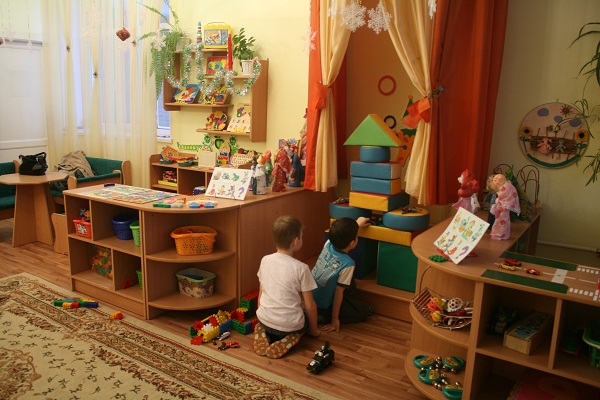
This is what a regular kindergarten in Russia looks like.
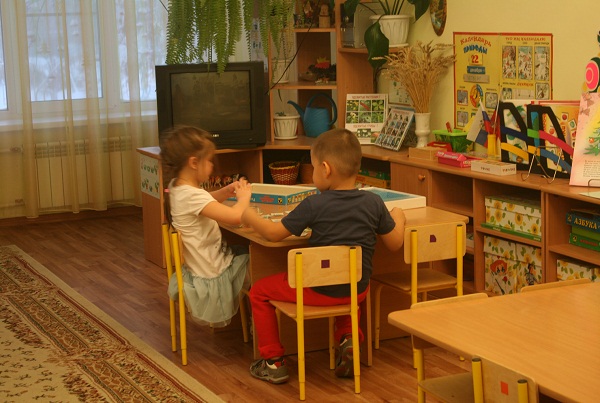
Children in kindergartens are educated according to programs aimed to prepare them for schools.
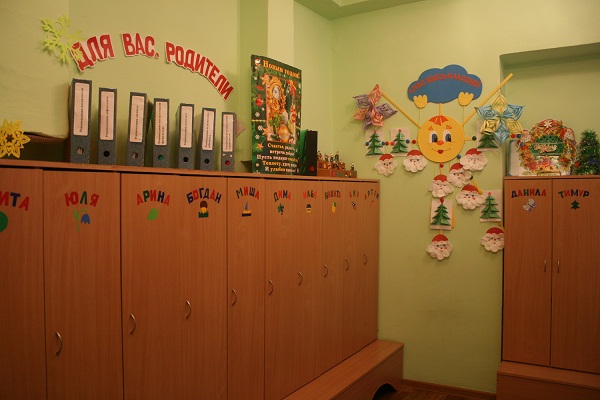
Each kid is provided with his personal “locker”. The crafts on the wall around the “Sun” are made by kids and they change every day.
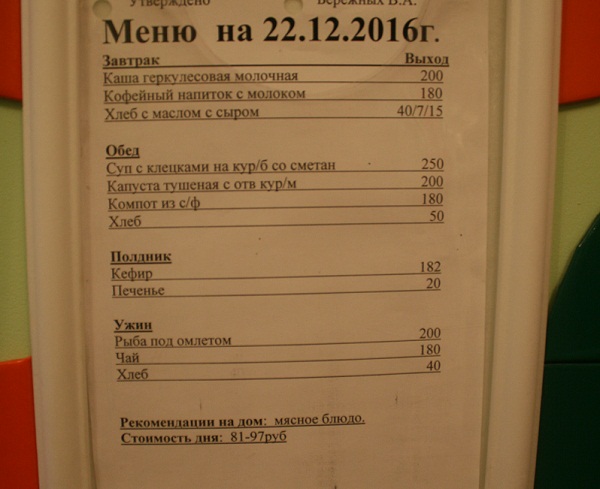
Meals provided by the daycare are pretty simple. The breakfast includes some porridge, a slice of bread with butter and cheese, and a hot chocolate. Lunch—soup with chicken and dumplings, stewed cabbage, compote and bread. Afternoon tea—kefir (butter milk) with cookies. Dinner (at about 4:30 pm)—fish and scrambled eggs, tea and bread. I appreciate the fact that they don’t give sweets or junk food to children.
Private sector
Private daycare centers are also popular. Sometimes it’s quite hard to find a place available in a state-funded nursery, that’s why many parents send their kids to private ones. Mostly private centres prefer to take kids older than 6 months. The price here may vary from 15,000 to 25,000 rubles per month ($245-410). If a mother needs to work, she can choose such an alternative. Though it’s quite expensive.
Also, I would like to tell you about private education centers for kids. Such places provide extracurricular activities for toddlers and pre-schoolers. These centres are getting very popular among Russians. I believe that all large cities have hundreds of such “schools”. Russian mothers consider it very important to educate their offspring from a very young age. In playgrounds I always hear mothers discussing lessons their kids are taking.
Besides, most kids start preparing for a school when they are only 4 or 5. When they enter the first grade, they have to already be able to read and write. English for toddlers is another course which is at must in many families.
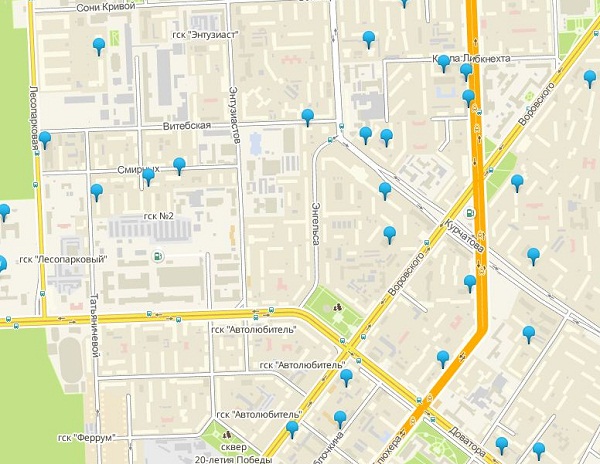
Big cities in Russia are full of private educational centers that offer different lessons for kids and youngsters. On the map, you can see places for kids in my city.
Here are average prices for 8 lessons in local child development centers (monthly rates):
- English for kids: 2,400-3,000 rubles ($40-50)
- Lego construction: around 2,500 ($41)
- Robotics workshops: 2,800 ($46)
- Drawing: 2,500-3,500 ($41-57)
- Music lessons: 2,600-4,000 ($42-65)
- Speech therapist: 4,100-4,700 ($67-77)
Psychologist costs 800-1500 per consultation ($13-24).
Sports classes, theatrical and dance studios are also in demand. The costs may vary from 2,000 to 3,000 rubles ($32-50) a month.
Thus, monthly rates for different lessons get to 2,500-4,000 rubles depending on the number of hours per week. One lesson (30-60 minutes) costs 250-500 rubles on average.
For example, my son visits a speech therapist (he has trouble with some sounds) twice a week. It costs 4,000 rubles ($65) per month (450 rubles per 30 minutes).
Besides, locals like to take their kids to theatres, entertainment centres, and cinemas. Theatres are pretty cheap—about 150-300 rubles per session ($2,5-5). Kids under 3 go for free.
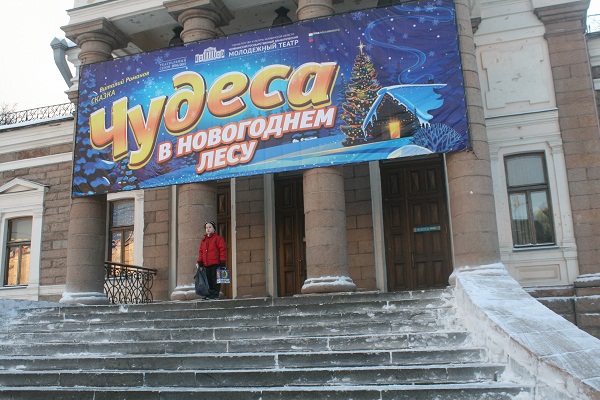
Going to theatrical performances is a usual routine for many Russian kids.
School education
As statistics show, literacy rates in Russia are almost 100%.
The government provides free school education. However, meals at the school café are not free. The package for daily hot meals costs about 1,000 rubles ($17) a month.
The amount of yearly school contribution starts from 2,000 rubles ($32). Some schools ask up to 6 thousand rubles ($98). Sometimes you need to pay 1,000-1,500 rubles ($16-24) per semester. It depends on the school. There are more prestigious schools, which require more money but also provide better education. As a rule, it’s hard to get a place in such establishments.
Schools also offer extracurricular activities, which are free of charge. Choreography, music lessons, vocal training, drawing, and chess are among the most popular. Of course, there are also various sport trainings in most schools.
Private centres offer lots of opportunities for boys and girls of school age as well. Today, for example, robotics is in high demand.
Private tutors for school subjects are quite expensive. On average, the price starts from 350 rubles ($5) for a 45-minute lesson.
Universities
Every Russian citizen would be happy if his or her child was accepted to a state-funded University. They are free of charge. Unfortunately, the number of such places is limited. One has to pass “entrance exams” with flying colours to win free admittance.
Those who are not so lucky have to choose from numerous private universities and colleges in Russia. It is also possible to pay for a place in a state university. You still need to pass entrance exams but most likely you will get accepted. Marks required for paid placements are just “pass” and not A+.
Unfortunately, prices here get more expensive with every year. In my city, if you want to become an architect or a dental surgeon, you have to pay more than half a million rubles for the course of 5 years (around $8,300) for the complete degree. Yes, it may sound like not much for you, but here where I live it’s a lot of money!
Prices in our local universities start from 65,000 rubles a year and reach 130,000 rubles ($1,071-2,142) per year on average.
One thing you need to remember: Russians have a different meaning for the words “college” and “university”.
Colleges are lower than universities. If the university education is considered as “higher education” (analogue of a degree in western countries), then colleges, which also offer 3-4 year courses, only give students what is called “professional middle education”. In other words, you get a professional training but it is not a completed “higher education” by standard Russian definitions.
However, in western countries they view such completed 3-4 year college courses on par with university degrees. This is why Russia is officially #1 country by the number of people with degrees.
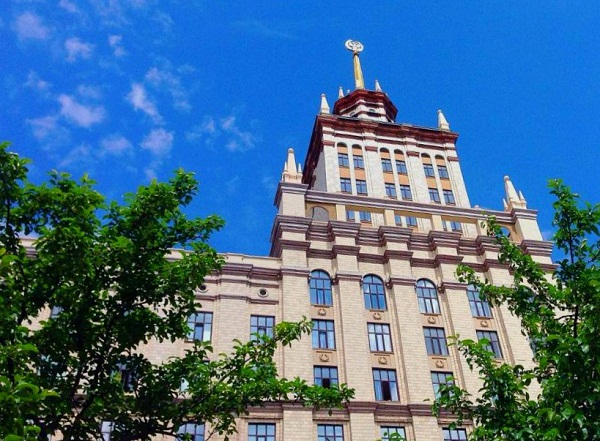
It’s one of the best universities in my region.
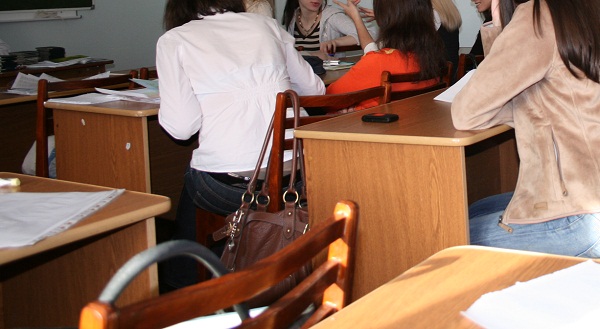
The price for a year of study starts from 65,000 (around 1,000 dollars). It’s a costly fee due to the fact that an average citizen living in a regional city earns only $280-400 per month.
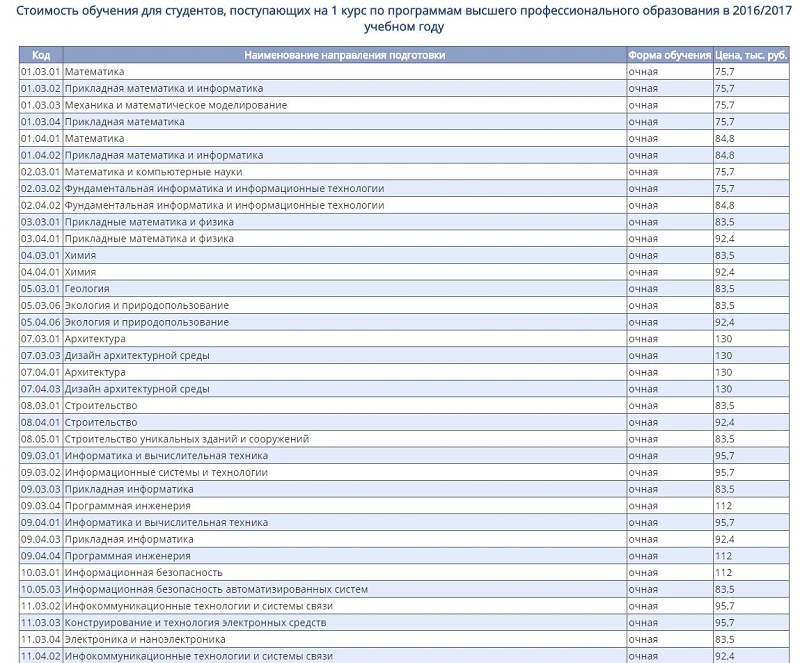
Here is the price list for the South Ural State University. The minimum fee per year is 75,000 rubles ($1,235). If you want to be an engineer or a programmer, you have to pay around 100,000 rubles ($1,647). It is a big sum for regular residents who earn 15,000-25,000 rubles per month.
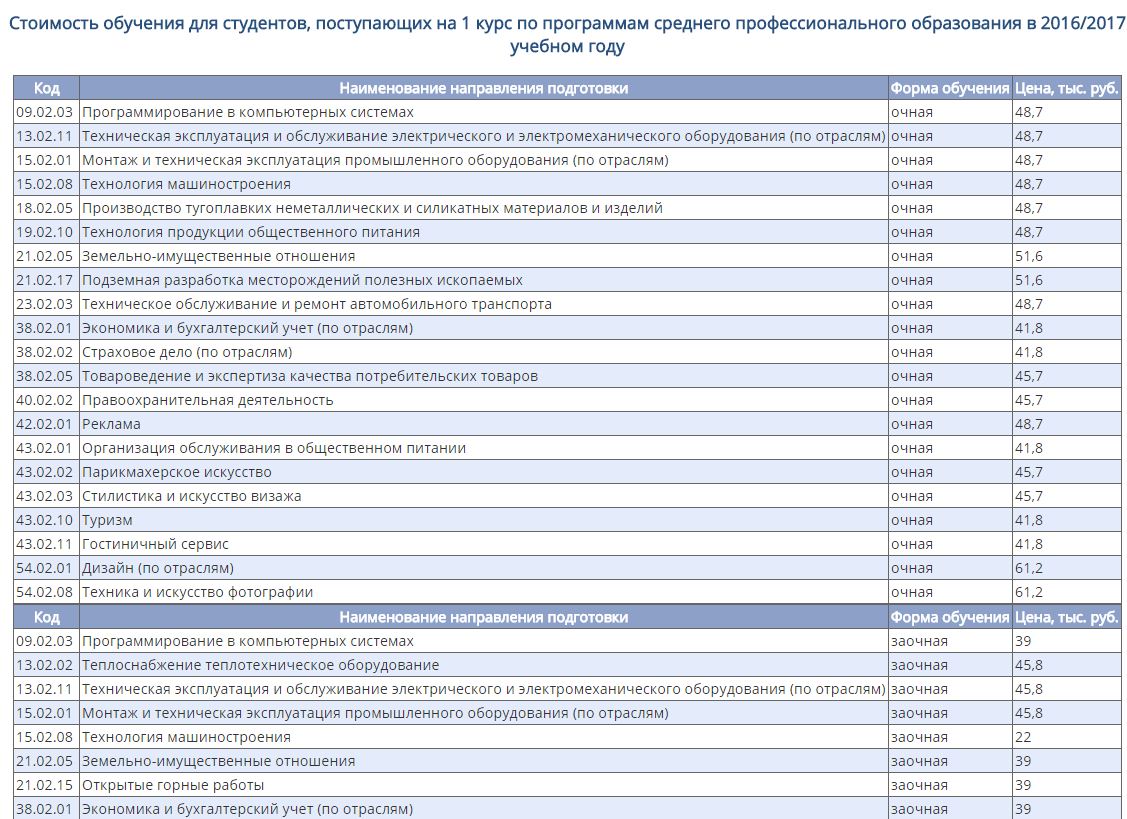
Professional education in colleges is much cheaper. The lowest yearly fee is 41,800 rubles ($688) for a degree in economics. Getting a degree by correspondence is the cheapest way.
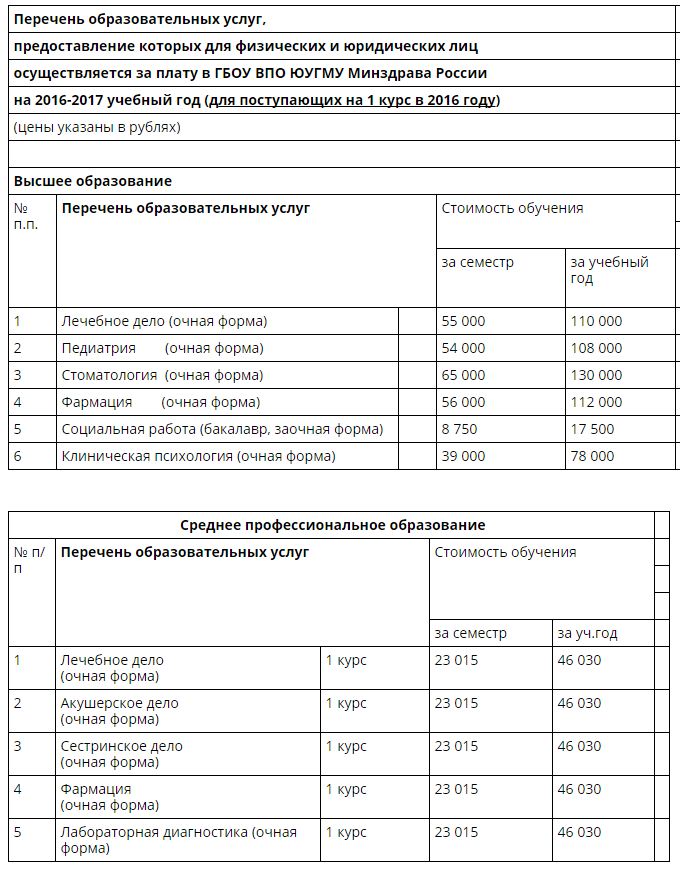
It costs more than 660,000 rubles ($10,875) in total to become a medical doctor in my region (110,000 rubles per year). Medical doctors have to study for 6 years.
Clothing
At the end, I would like to add another expenditure item, which is warm clothing and shoes. Clothes for autumn and winter seasons are quite expensive. Besides, kids are growing every year and each season you need something from warm trousers to hats.
For example, a set of a winter jacket and trousers costs around 8,000-10,000 ($131-164) this year. Parents living in sunny places do not have to think about it. They can walk in shorts or jeans all year long.
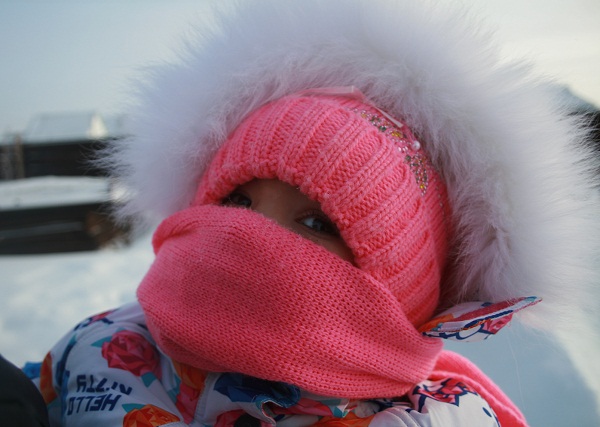
Minimum prices for a set of a winter jacket and trousers were about 8,000-10,000 rubles ($131-164) this season.
Thus, it’s up to you to decide whether it’s cheap or expensive to raise kids in Russia. However, most families consider it a costly affair to have children. The prices get higher while people’s real earnings drop. But you can significantly cut your expenses if your offspring go only to state kindergartens, schools, and then get accepted to state-funded places in universities. This is why mothers and fathers in Russia strive to educate their offspring since the early age. A smart child has the chance to go all the way with minimum costs.
 Read also:
- How Russian women look in winter
- Average salaries in Russia 1991-2016
- How is it possible for Russian and Ukrainian women on low wages to travel and live exciting lives?
- Russian Kindergarten for adults (video)
Share this article



Congratulations on a great article. Finally, no media lies 🙂
Good old fashion detailed information allowing the reader to make informed understanding of a subject close to all our hearts.
Great Work EM [ Adilia]
It is expensive to have children in Europe as well. I would say even more expensive (when they pay all taxes and most europeans have mortgages as well, they don’t have so much for children). Unfortunstely, there is no place in Russia where children “can walk in shorts all year long” 🙁 Everywhere in Russia you need warm clothes for the winter time. Even in Sochi. People who live in warm places like Australia or Florida, California, they don’t need it.
Kids are the most important thing what we have in our life , because it is our future. Growing up our babies needs enough much money but parents ready for everything . So they do not care about them spending of money a lot . Nowadays kids ask from their parents more and more goods as the devices and modern clothes which are really expansive .Parents borrow money but make happy their daughters and sons . Actual problem that babies do not appreciate what moms and dads do for them and I wish it will change .In our time teens… Read more »