




 It’s common knowledge that some people keep waiting for a hope to materialize, even when they understand, deep inside, it’s not going to happen. This phenomenon is called the sunk costs fallacy. It makes a person stick to a choice that is clearly not going to give them the best result, due to feeling invested in the option.
Individuals who are prone to acting this way cannot give up something they have invested a lot of money or effort in. They are even willing to give up something that would give them a better result, to stick with the option that they have highly invested in. Psychologists used to believe that this quality was only typical to human, but apparently mice and rats fall victims to the sunk costs fallacy, too.
Humans and rats hate to lose what they’ve invested
Researchers from the University of Minnesota found out that mice and rats also keep trying to pursue choices when it’s no longer rational, ScienceDaily reported.
The rodents stay committed to their choice in hopes for their expectations to come true, all the while wasting more resources on the fruitless option.
The author of the study Brian Sweis and his colleague David Redish conducted an experiment to see whether the sunk costs fallacy was typical to other species.
Rats and mice had to go through a maze, which included 4 meal spots. But the food wasn’t given to them immediately. When they reached the spot, little rodents had to wait for some time until the food would show up.
Rats and mice had only 60 minutes to collect the food from all 4 spots. Thus, waiting longer at one spot would diminish their chances to get a meal at all 4 spots.
However, the more they waited, the more unwilling the rodents became to leave, even if the food wasn’t showing up, apparently because they had already invested some time. It was a clear demonstration of the sunk cost fallacy.
The rodents and humans use similar neural systems when considering their next step in such situations.
People realize it took them a lot of time, money or effort to accomplish something and they are too scared of quitting and thus losing everything they’ve invested. So, they prefer to continue pursuing their choice even if it may lead to losing more.
In the experiment, humans were not made to wait for food, but for funny videos. Each person got an indication for how long they would have to wait and could make a decision to abandon the point and move to the next one, or wait and get the reward.
Both rats and humans demonstrated the trend to wait pass the allocated time for the reward to show up — and the more time they have invested, the more hesitant they were to abandon the waiting game and move to another option.
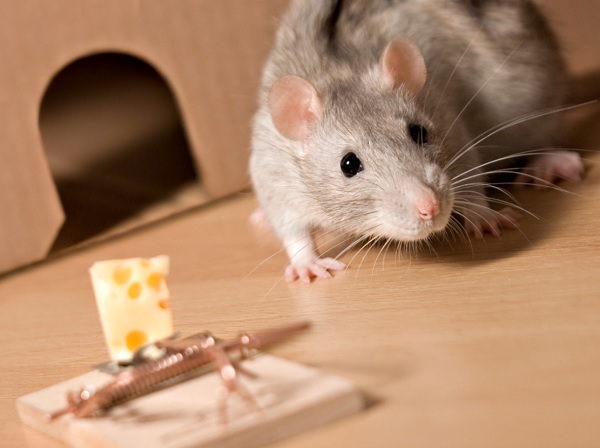
Rats, like humans, tend to wait long after the time passed for the reward to be delivered, falling victims to the sunk costs fallacy.
Irrational behaviors driven by sunk costs
Human history has numerous examples of irrational behavior due to the sunk costs fallacy. However, many people are still unaware that it’s a factor in their decisions and they don’t see it as irrational, rather rational.
Every garage in modern western households is the triumph of the sunk costs fallacy: People keep useless junk in the garage, often leaving cars that are worth tens of thousands of dollars in the street under elements. Why are they doing it?
The fear of loss of what’s already invested, in this case into the now useless junk sitting in the garage, in hopes they may need it “one day” prevents them from getting rid of the stuff they don’t use and put there the cars they do use and need to protect. If you are not guilty of that, you probably know someone who is.
The sunk costs fallacy keeps people in bad relationships and dead-end jobs.
The Concorde fallacy
Concorde was a supersonic plane developed in 1960s. Its unsuccessful future was predicted after its first flight. But there was so much invested into the project, the company simply refused to abandon the doomed enterprise. Later on, the plane ended up being unprofitable. The fear of losing everything put into the development of Concorde stopped the timely closure, causing a much more significant loss.
Facebook game Farmville that was extremely popular in 2009. This game requires every player has to look after their garden regularly, while the initial plot and seeds are given for free. A lot of people became addicted to it because they were unwilling to lose all the investments of time and often money, as they could purchase some things advancing their virtual farms. There was nothing rational to their thinking, but the investment of time they made was hard to abandon.
The pain of a loss is more important to people than a potential gain
Behaviorist Dan Ariely says that people always are more sensitive to what they can lose than to what they can gain.
Ariely conducted an experiment where a stand was put on the street, offering chocolates for sale. People were offered to buy one Hershey’s Kisses candy for 1 cent or a Lindt Truffle for 15 cents. Thus, the difference was 14 cents and most people picked the Lindt Truffles, since it’s a much more nicer piece of candy.
Then Ariely changed prices, keeping the difference of 14 cents, but this time people could get Kisses for free, while Truffles were priced at 14 cents precisely. It was still a great deal, and the difference in costs remained the same. But as you can guess, people stopped paying once they could get something completely free of charge. Now everyone was choosing Hershey’s Kisses, even though a much nicer option was available at a great price.
In another experiment people were told to imagine they bought a skiing trip for $100 and then purchased another one for $50, which was a much better tour to another destination, after which they found out the trips were on the same date. The trips were non-refundable. The respondents were asked to pick one trip to go and most people would still go to the one that they paid $100 for, even though the second option for $50 was much better. The thinking was completely irrational; the money was already spent; nothing would change regardless which trip they picked, financially, but people would still use the option for which they paid more.
In another experiment researchers asked people what would they do if they went to a movie they really wanted to see. In one variant people were asked what would they do if they had $10 in the wallet but the banknote was gone when they came to the cashier, would they still pay with a card to see the movie? The majority of people said they would still buy the ticket; only 12% of participants said they wouldn’t.
Then the situation was changed: People were told they bought the ticket for $10 but when they came to the entrance, the ticket was lost. Would they buy another ticket? In this case most people (54%) said they wouldn’t pay for another ticket. The actual amount of money lost didn’t change: $10. But people were hesitant to buy the ticket again when it was gone, while losing the banknote didn’t affect their desire to see the movie. It’s like they have already spent the allocated money and there were no more for this cause.
PPL fallacy
It seems insane that some people still use PPL sites, when it’s common knowledge that letters and chats are written only to extract money from victims who are still paying and that the only result you can hope for is to meet a woman who was writing letters to dozens of men professing her non-existent love, just to get some little cash, or a girl who was happy for someone else to do it, using her photos, while getting occasional kickbacks in the form of gifts sent by ardent suitors.
These men who are still using PPL are not stopped by the knowledge that every participant of the scheme knows what is going on and ready to rip off unsuspecting victims with no compassion, and these guys are still hoping to somehow arrive to a good result for themselves. They are finding every reason why they continue with the enterprise, even though they know deep inside it’s a scheme.
After spending hundreds of dollars on communication, men often learn that the whole romance was a fake. Do they abandon it? Some do, but many go and spend more money on a trip to Ukraine, which costs them 10 times more than what they have already invested and makes the accumulated loss even greater, if they decide to stop financing the venture. It’s like they feel the need to prove to themselves it was real, while knowingly suspecting it was not.
The same logic is behind women and men sending hundreds of thousands of dollars to online romance scammers. If you think these people are stupid, think of the guys that still use PPL. It’s the sunk cost fallacy in action at every point.
Are you more rational than a lab rodent?
Humans are complicated. We are capable of analyzing, regretting and predicting. We realize our faults and still act irrationally instead of abandoning a completely hopeless choice and getting on with facts. It hurts to quit something you’ve dedicated yourself to, but sunk cost fallacy is a trap that entails losing more than people have already lost.
Share this article






CommentsКомментарии ( 0 )